
Palestine '36
Today we interview the writer/director of this Oscar shortlist Best International Feature film and review Oscar Night at the Independent Picture House.


From time to time here at Matt at the Movies we are given amazing opportunities to attend events or interview filmmakers. Jay Morong, the creative director from the Independent Picture House, put me in touch with the publicist from Watermelon Pictures who has their film Palestine ‘36 debuting at IPH this Friday. Click here for tickets.
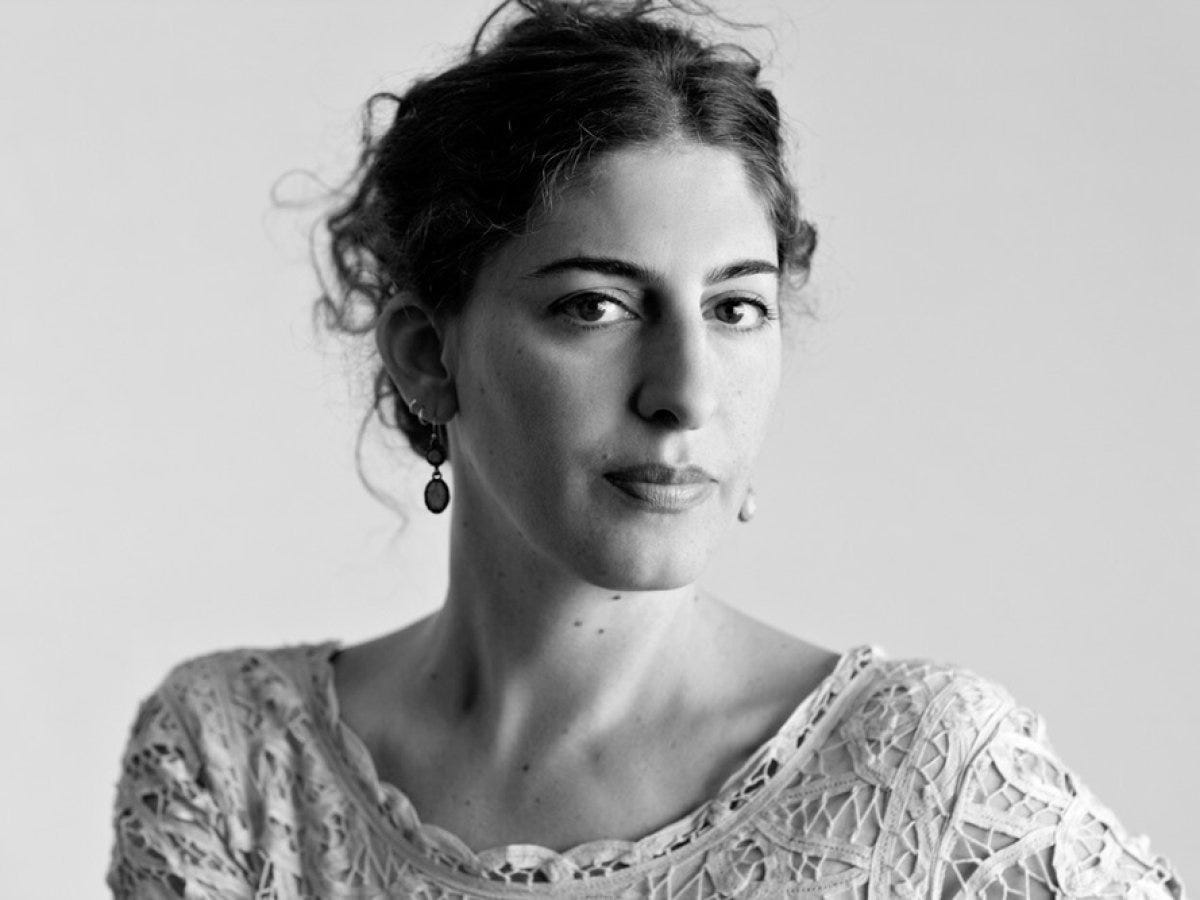
The film was shortlisted for Best International Feature at this year’s Oscars and our guest interviewee Annmarie Jacir was the first woman director from Palestine to garner this recognition. We’ll get into the film and my interview with Annmarie in a bit but let’s first talk odds and ends from the 98th Academy Awards event held at IPH.
Oscar Night at IPH
On March 15th the Independent Picture House hosted its four annual Oscar fundraising event. They had an amazing silent auction with a variety of items for cinephiles and non-alike. Live music played in the lobby and people mingled, ate, took pictures, watched nominated shorts, and most importantly had a space to discuss all their favorite films of the year. When the main event happened in the main theater we were greeted by our hosts Liza and Alicia from Positively Charlotte who served as emcees for the evening in between commercial breaks. They interviewed local film industry guests and talked award winners throughout the night. Overall I bested Dana “the Movie Muse” Gillis by a single category to take home our annual bet.
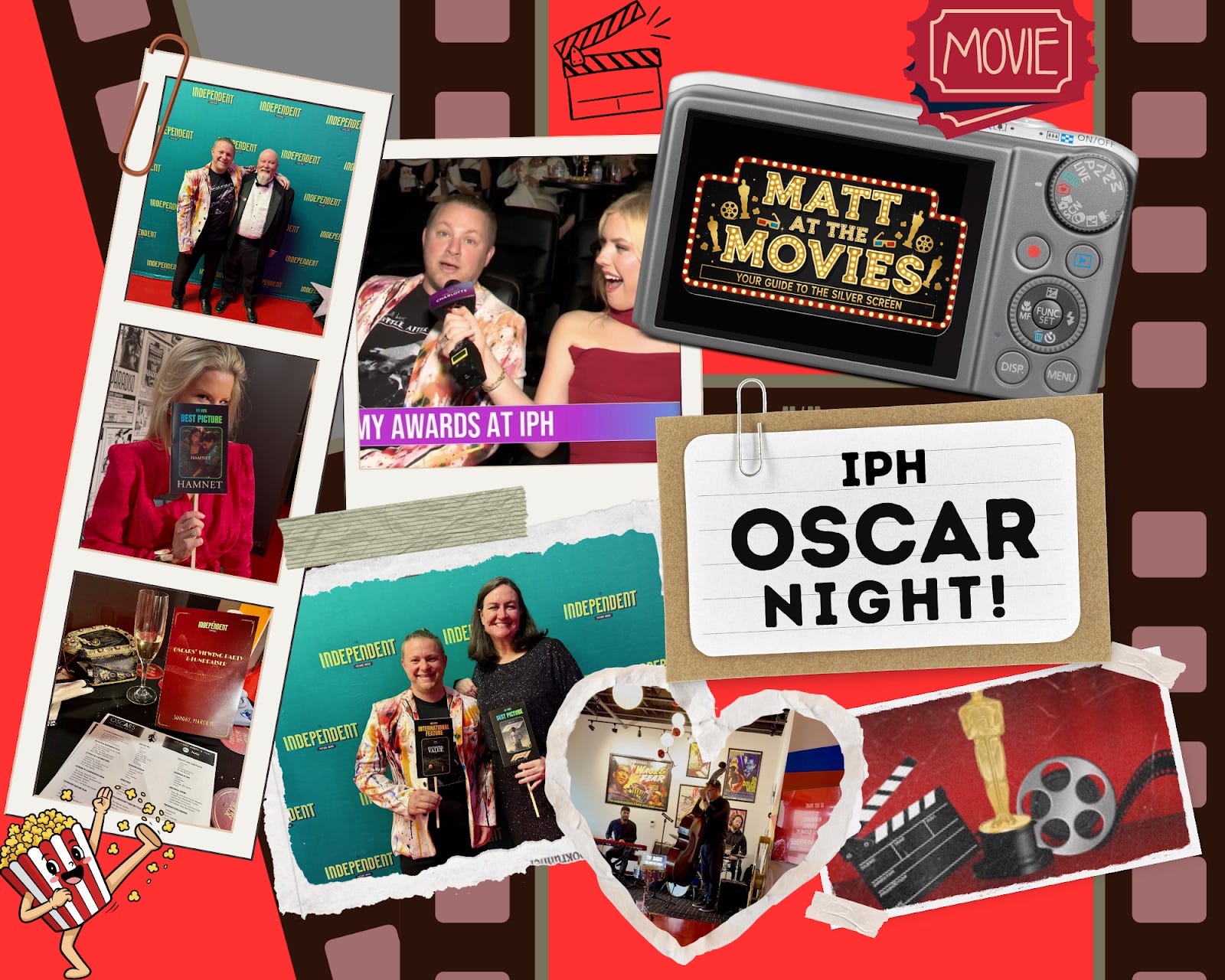
Speaking of winners for the night, it was great to see our combined favorite film of the year One Battle After Another take home Best Picture. Director Paul Thomas Anderson did have his coronation night also winning for Best Director and Best Adapted Screenplay. He shunned his Oscar bagel of eleven previous nominations with no wins to be the king of Hollywood for 2025.
The other big winner for the night was Sinners, which had a record setting sixteen nominations, walking away with four Academy Awards. This included Ludwig Göransson winning his THIRD-best score statue in seven years, the first female cinematography winner in history for Autumn Durald Arkapaw, Ryan Coogler’s first Oscar for Best Original Screenplay, and finally Michael B. Jordan taking home Best Actor.
Only a couple slight surprises like the inaugural Best Casting going to Cassandra Kulukundis of One Battle and Mr. Nobody Against Putin winning for Best Documentary Feature. Overall the hosting from Conan O’Brien second year was fine, there were some technical difficulties with the broadcast, and a few poignant speeches in an otherwise uneventful evening. With the current political climate it seems about as good as we could have hoped for to just be able and enjoy what the industry had to offer this year.
Palestine ‘36 (click for trailer)
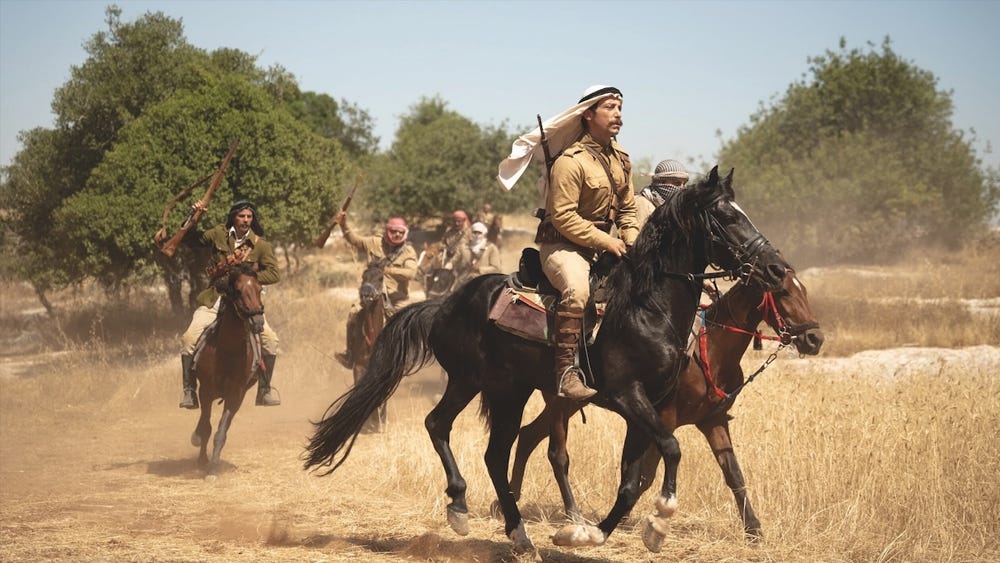
The synopsis of the film is as follows:
1936. As villages across Mandatory Palestine rise against British colonial rule, Yusuf drifts between his rural home and the restless energy of Jerusalem, longing for a future beyond the growing unrest. But history is relentless. With rising numbers of Jewish immigrants escaping antisemitism in Europe, and the Palestinian population uniting in the largest and longest uprising against Britain’s 30-year dominion, all sides spiral towards inevitable collision in a decisive moment for the British Empire and the future of the entire region.
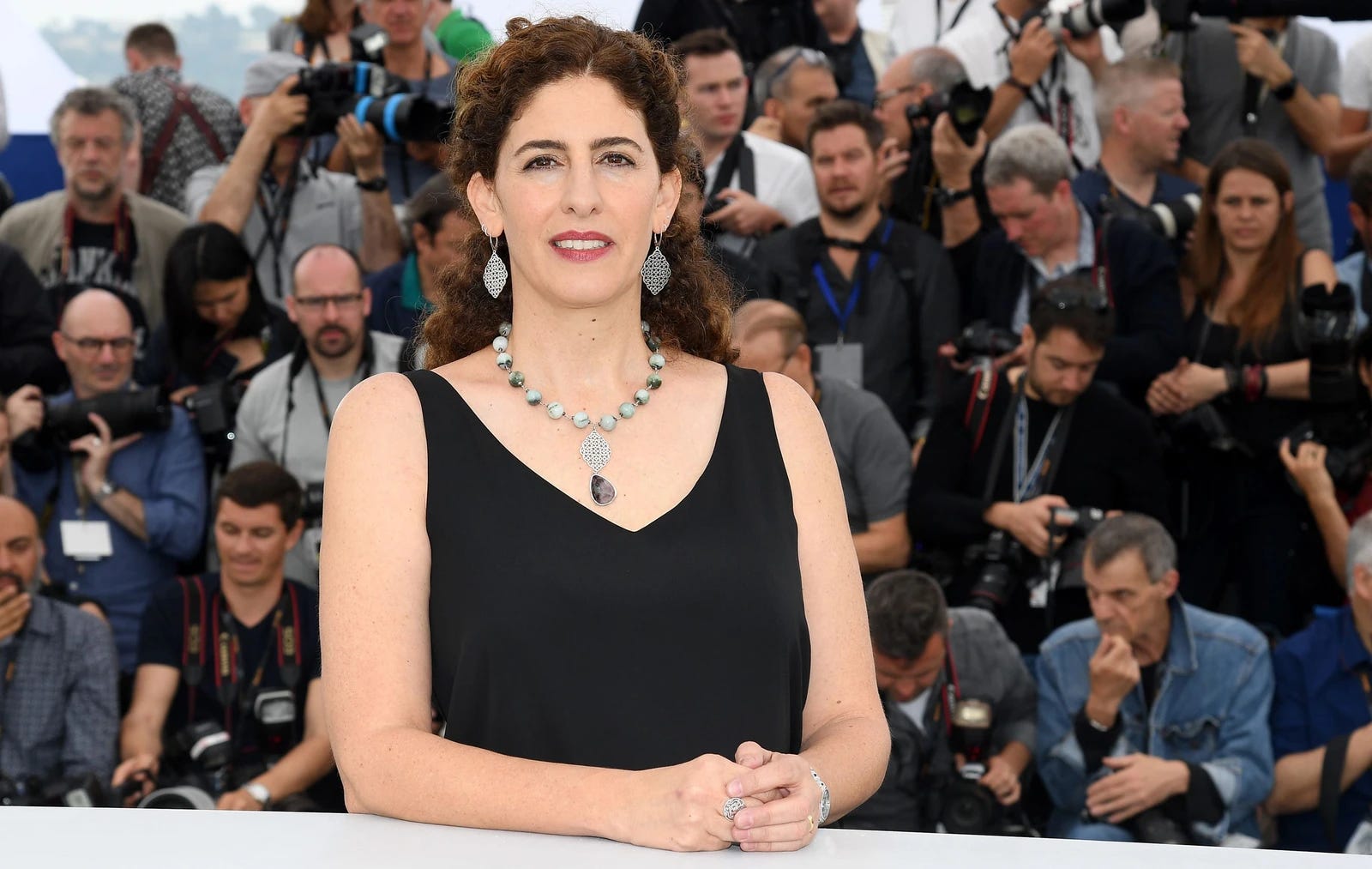
Annemarie Jacir has written, directed and produced over sixteen films. Her films have premiered in Cannes, Berlin, Venice, Locarno, Rotterdam and Toronto. All three of her feature films were selected as Palestine’s official Oscar Entry. She was born in Palestine, grew up in Saudi Arabia inside a diaspora environment, completed her education at Columbia University, and now spends most of her time between Bethlehem and Haifa.
Let’s spill the tea in our interview diving into topics ranging from writing to production to actors and even some Palestinian film recommendations for the uninitiated. Here is my conversation with Annemarie Jacir, writer/director of Palestine ‘36 which is debuting this Friday at the Independent Picture House. Click here to purchase tickets.
MatM: I read that you’ve envisioned telling this story for years. Why now?
AJ: Well, it’s not really “now”. I’ve been working on it for so long, so I feel like it’s long overdue. But it’s an important story now. I think for as long as I can remember, in my life, my parents’ life and my grandparents’ life, we are just here in the middle of it all again. You know war and occupation, and this struggle to exist. I feel like we’ve really got to tell the stories about the roots of it. It’s a story that hasn’t been told before, and it’s really the origin story in many ways to where we’re at today. I think it’s important to know our history in order to imagine and work towards a better future than this one.
MatM: You wore many hats for this project including writing the screenplay. This was an expansive story covering many conflicts, several years, and multiple viewpoints for a two-hour film. What was your biggest challenge creating a script with so many moving pieces?
AJ: Yeah, it was a challenge. It was a challenge because I didn’t want to do it in the classical way of having one hero character from beginning to end. I didn’t want to have any hero, in fact, and that the place was the hero. Land was the hero. Our home is the hero. So it was tricky because it’s like weaving, and it was tricky to ride. For me, you know, it was like how all of these stories kind of intersect. They’re all experiencing a major event, but in a very personal way, and in very different ways.
So that was the thing about the script to keep it personal and intimate. Then in the editing it becomes something else. After you shoot it, you’re adding certain characters that are taking up more time than others. Creating the rhythm of it. To have a very small role, yet to be able to understand the character.
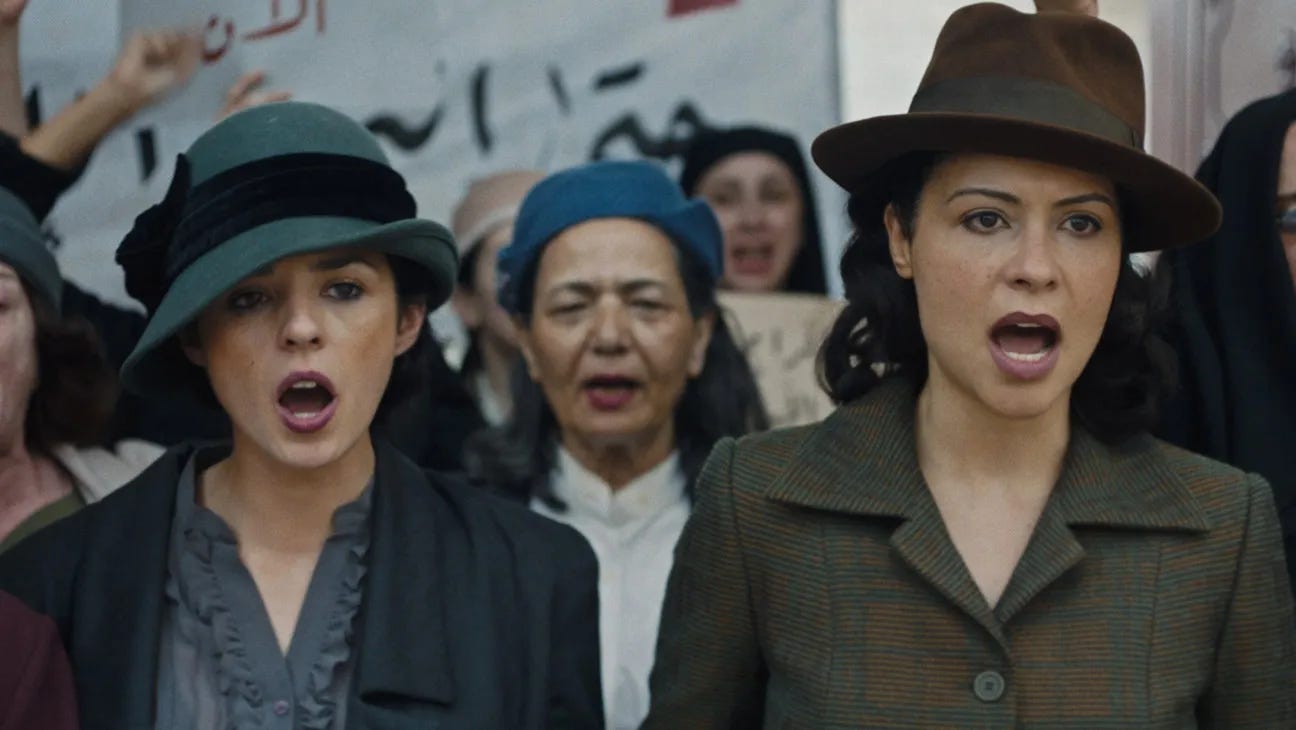
MatM: You are not only the writer but director of the film. In terms of production, your team was able to film some of the scenes in Palestine. Logistically with daily changing geopolitics of the region, shooting could not have been easy. Did you feel it was important to be on location to tell this story?
AJ: I absolutely felt it was really important for us. For the team, for the crew, and for the story itself. It was very heartbreaking for me. It was devastating when we had to move the production to Jordan. At some point, my producer describes it. He said, “I had to cut the umbilical cord. You just wouldn’t let go. You wouldn’t, you know, and I just, we’re not gonna be able to film”. It was becoming more and more obvious. So he cut it. And I told him, he didn’t cut it, he just made it longer. Then I came back anyway.
It’s a story about this period, and the fact is Jordan does look different from Palestine. Even though it’s geographically so close, it looks different. The housing, the architecture, the stones, and especially when you’re talking about cities like Jerusalem. There’s no way to replicate thousands and thousands of years. So many different peoples building on top and building on top.
You know, there’s a real depth there, and you feel it. It’s even in the air. It’s like why people get this “Jerusalem syndrome” from being there. I don’t have “Jerusalem syndrome”, but it’s a real thing. It is important for a film to be able to be in the actual place. Also for the team and the film it makes it special. It’s where we live. It’s where we’re trying to build an independent film industry, and you can’t do that if you’re shooting somewhere else
MatM: This cast was incredible and included some amazing veteran actors including Oscar winner Jeremy Irons. I wanted to take a minute to talk about Karim Anaya. He made his film debut playing the critical role of Yusuf. Why was his character important for the viewers to understand the revolt?
AJ: He’s amazing. He does parkour. He grew up in a West Bank City, in Qalqilya, doing Parkour as a way to live. Then he joined the theater, but it’s his first experience on film.
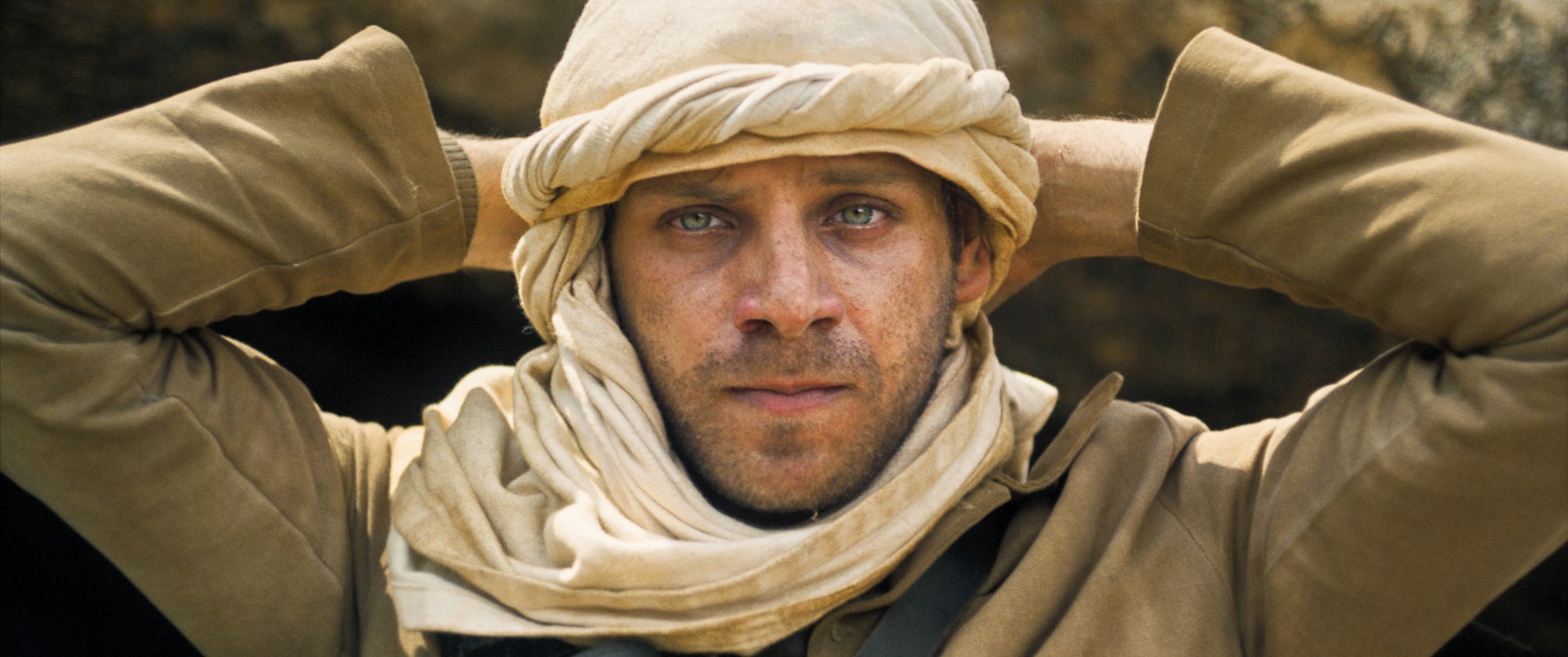
MatM: With his character, did you find it necessary to have a character that moved in between a couple different worlds? Was that intentional to have a character that kind of went to the upper echelons of society but at the same time was a farmer?
AJ: For me definitely. What I liked about Karim playing Yusef, is that Karim is a very sensitive person. There’s a naive side of him, and there’s something that’s really excited about the world and the future. He is excited about Jerusalem, excited about this upper class. He could become part of it, and he wants to be part of it.
There was just something about him too. His on-screen presence, and then, like, when he was in the frame, I was like okay! Then, when I found out afterward that this was his debut, it really surprised me, because he kind of just has that magnetism to him. It was interesting because he’s classic. When I cast him he had really long hair and a ponytail. We cut that hair, got him in period costume, and he just really looked so 1930s. It was incredible.
MatM: Robert Aramayo is coming fresh off his BAFTA Best Actor win for I Swear, plays a real-life intelligence officer in the film who was also an ardent Christian Zionist. Did you give him any advice on how to portray this character because on screen he gave an extremely chilling performance.
AJ: Well, we talked a lot because it was important that Captain Wingate was the baddie in the film, right? I mean, he’s the guy that’s carrying out all of this violence, and it’s this unhinged character. But it’s not interesting to play that really. So, for Rob, he’s very intense, and he read everything about Wingate. Everything. He didn’t talk to anybody on set at all. He didn’t make friends with anybody. It was only me and him. He didn’t want to connect with anyone because it was important for him. He went a little method.
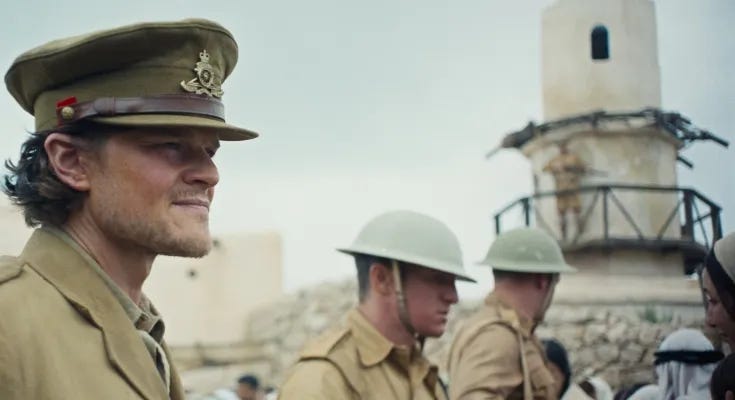
Also, it’s got to be interesting if he’s just yelling, right? If he goes in there screaming it loses its steam so we had him keep it inside. I found that more chilling. I find that more chilling when there are characters like that, and then he could snap at any minute. Yeah, it was a strong choice, and we talked a lot. He does believe that he’s protecting this place, and that he’s on a divine mission. It’s tough to say some of those religious lines but Wingate really believed that stuff. So for us, it was trying to get Robert to believe it as well.
MatM: Palestine has had great success, particularly in the last twenty years on the international stage. Massive congratulations on this film making the Oscar Best International Feature shortlist. For viewers in the U.S. who aren’t familiar with Palestinian film, what would you recommend as a good introduction?
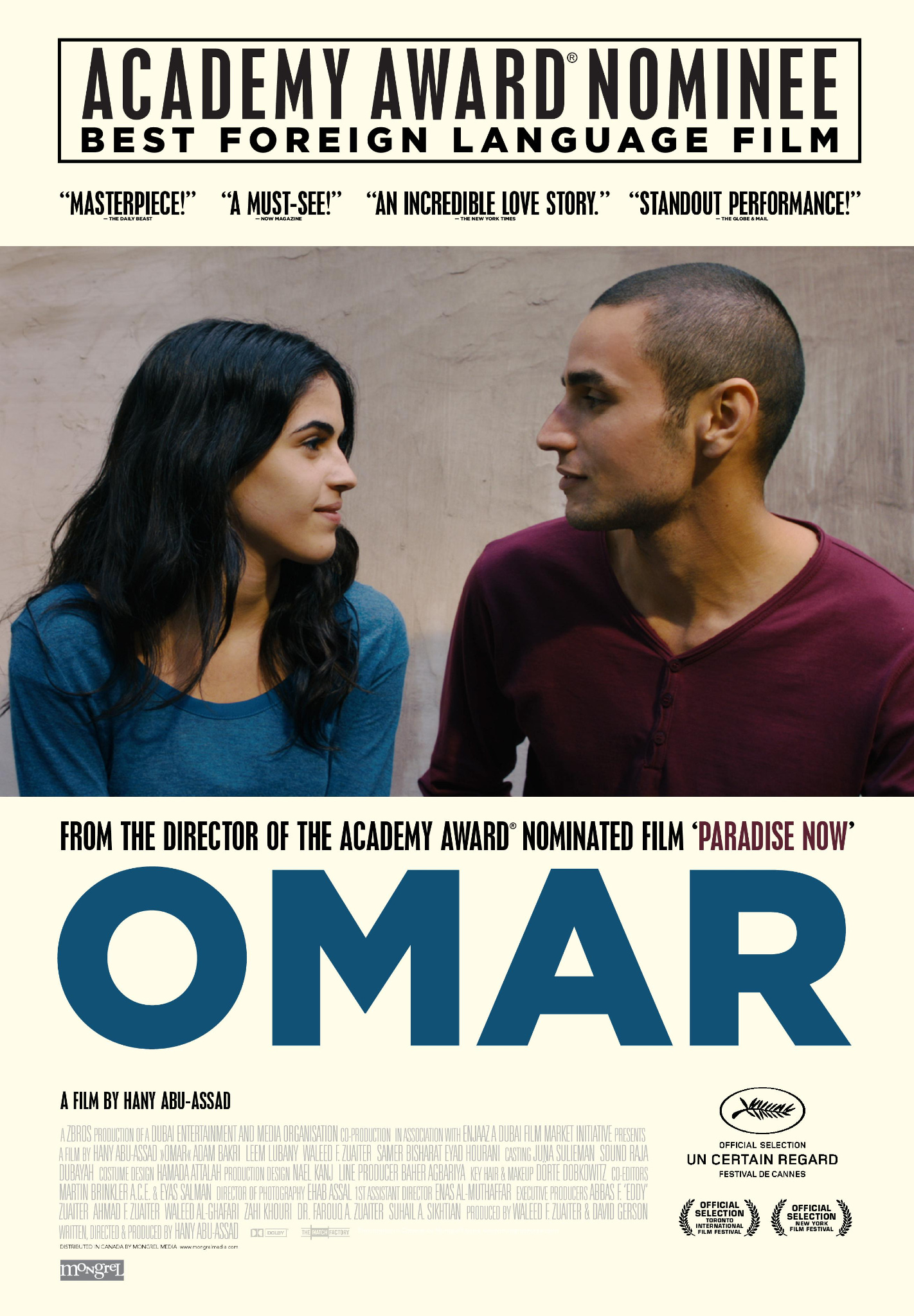
AJ: Hany Abu-Assad has made two films that were shortlisted and even nominated for Palestine. One is called Omar and the other is Paradise Now. I think those are great films to watch. There’s amazing cinema that has reached internationally and there are a lot of filmmakers here doing work in documentaries. I think more people are watching documentaries than fiction, and it’s incredible, but it’s just hard to find. So when we get a release, it’s a big deal. Also, a lot of American cities now have Palestinian film festivals which is not something we used to see.
MatM: Finally, if there is one idea you hope resonates from Palestine ’36 as viewers walk out of the theater, what would it be?
AJ: Yeah, my hope is that people go in there with open hearts and open minds. We made this film under the most difficult situation. We made it under a genocide, against all odds. We had to start and stop so many times. It should have taken a few months, and it took years to finish. So the fact that it screens at all we just want the audience to have a connection because we are all of us in this world.
It’s a dark time, not just for Palestine, but I think everywhere in the world. It’s politically a very dark time. This is the one thing that when we can connect to each other. Audiences connect, and we share art, we share film, and we share cinema. I don’t think films are going to change the world. I don’t think my film will change the world for sure. But what I think is that when we can allow ourselves to connect to each other. That is the most important thing that can happen. That is also the most threatening thing to people in power.
Matt at the Movies Score: 8.0/10 (An extremely important film for to understand the past and present of Palestine where it’s only flaw is packing so much story into a two-hour window)
Thank you so much to Jay Morong at IPH, Watermelon Pictures, and especially our guest for today Annmarie Jacir. We’ll be coming back over Spring Break with a preview of films to come and review of A24’s new film The Drama starring Zendaya and Robert Pattinson. Catch Palestine ‘36 starting this Friday at IPH and also at the AMC Concord Mills 24. We’ll see you next time at Matt at the Movies over at Y’all Weekly.
 | A guest post by
|